Loading...

Sunday, July 31, 2011

The Week That Was, july 31, 2011

france A Makeover for Evian Masters

Steve Smyers plans to spend a good part of the next year in Evian-les-Bains, France, where he’ll oversee a complete makeover of what’s said to be “one of Europe's most beautiful courses”: the 18-hole track at Evian Masters Golf Club.

Evian Mineral Water Company has hired Smyers to give the 6,620-yard layout a $6 million to $7 million overhaul, to prepare it for its next life -- beginning next summer -- as the home of the LPGA's fifth major.

“This is a unique opportunity to take a fantastic golf course and transition it into the model of future championship play,” the Lakeland, Florida-based architect told Golf Digest.


The golf course has been drawing vacationers to the Royal Parc Evian resort since 1904, when its first nine holes opened. (The second nine arrived in 1922.) No doubt, part of the attraction is the setting: Royal Parc Evian is snuggled against the southern shore of Lake Geneva and is said to offer enchanting views of the Swiss Alps.

But the course has become a little rough around the edges, and Smyers has been directed to upgrade all of its design elements, create some spectator-friendly viewing areas, and give it a little more length, to make it a legitimate championship venue.

The work is scheduled to begin any day now. It’ll be the first major overhaul that the course has received since Cabell Robinson redesigned it in the late 1980s.

new zealand Sold: Kinloch Golf Club

The only Jack Nicklaus-designed golf course in New Zealand has a new owner.

John Sax has purchased Kinloch Golf Club in Lake Taupo, which features a 7,363-yard Nicklaus “signature” course that opened in 2008. Nicklaus courses aren't everyone's cup of tea, but most observers believe his inland links at Kinloch is among New Zealand's premier golf properties.

“This is not your typical Jack Nicklaus course,” a British golf reviewer concludes. “The property is a piece of farmland on volcanic terrain, flanked by craggy hills and panoramic views over majestic Lake Taupo. Nicklaus has crafted a rugged, ramshackle masterpiece into this landscape, but it will surprise some visitors to learn that most of Kinloch’s features are entirely man-made.”

Sax, the principal of Southpark Corporation, owns the Treetops Lodge in Rotorua, one of the top-rated vacation destinations in New Zealand. By 2012, he hopes to open what he's described as a “world-beating lodge” and a conference center at Kinloch, and he eventually aims to find space for up to 69 houses on the hills adjacent to the course.

“It's a stunning location,” he told the Rotorua Daily Post.

morocco Vacation Houses Take a Holiday

Despite record tourist traffic and an ambitious golf development program, vacation houses in Morocco are selling for a song.

According to a report in the National, since 2008 the prices of vacation houses in Marrakech, one of the most popular vacation places, have fallen by as much as 50 percent. As a result, work on many large-scale resort communities in Morocco has stopped, calling into question the future of the 13 golf courses that are expected to open in the nation over the next three years.

“The second-home market collapsed totally,” a real estate consultant told the paper.

The reason for the collapse: Over-exuberant developers flooded the market with over-priced villas and condos, thinking that Morocco was about to become the world's next great holiday hot-spot. Those units now can't be sold, because falling prices in better-established vacation destinations -- Spain, Portugal, Greece, Italy, Cyprus -- have proved to be more attractive to bargain-hunters.

The irony is that Morocco continues to attract large numbers of tourists. In 2010, the number of arrivals hit 9.3 million, an 11.5 percent increase over 2009. What's more, the numbers posted in the first quarter of this year are up by 6 percent over those recorded in the first quarter of 2010.

At least some of that tourist traffic has been generated by Morocco's 27 golf courses, many of which have opened over the past decade. But the tourist traffic isn't translating into real estate sales and most likely won't until prices fall even further.

“I'm bullish on Morocco in the long run,” another consultant told the National, “but what will happen is that a lot of developers will have to reset their price point.”

Friday, July 29, 2011

worth reading Golf in China: Boom or Bust?

What's the future of golf development in China? Will all the heady predictions about the growth of the game pan out or fizzle out?

Following are excerpts from an unsigned article -- “Will China's Golf Boom Hit a Hole in One, or Land in a Bunker?” -- produced by the Wharton School's Arabic Knowledge group. To read the entire article, visit the group's website.

In Japan, during the heady bubble economy of the 1980s, investors speculated on golf club memberships, whose prices skyrocketed to millions of yen until the bubble burst.

A similar golf fever infected Ireland when its economy was heating up in the 1990s: Golf fees at clubs quadrupled, and banks financed memberships that spiraled to unheard of heights.

Today, golf watchers wonder whether China will be the next country to tee off with its own boom and bust. With the economy growing rapidly and incomes rising, interest in the sport is increasing. About 250 courses are under construction in China, and about 600 more are on the drawing board. . . .

But will China's golf boom hit a hole in one, or land in a bunker?

Ye “Tiger” Bi, the founder and CEO of China Golf Group, a Shanghai-based golf course developer, clearly expects the former. During a keynote speech at a recent annual Wharton Asia Business Forum in Philadelphia -- titled “Global Asia, Global Opportunities: Capitalizing on the Growth in the East” -- Bi noted that demand for golf courses in China currently exceeds supply, leaving the industry a long way to go before it reaches saturation.

“We see a very exciting and promising future in China's golf business over the next decade,” he said.

One reason for this optimism: Increasing disposable income in China “has created huge growth opportunities” for numerous sports and leisure sectors, including golf.

As Bi -- a serial entrepreneur who set up his golf company in 2006 -- noted at the Wharton event, China's economy has grown at a rate of more than 8 percent annually over the past 20 years, creating an appetite for luxury lifestyles and leisure activities among the country's new wealthy.

“It is widely believed that now is China's time for golf, because the economy and increasing consumer demand is strong enough to support the industry,” Bi said. . . .

Since 2004, the [Chinese] government has put moratorium on golf course development due to concerns that developers were illegally building their resorts on farmland. Reports say developers have been able to secure permission from local governments despite the ban or sidestep the rules by calling a golf course a park or an open space. Many have also combined their golf ventures with luxury property development to take advantage of the country's real estate boom.

Securing enough land for development is arguably one of the biggest challenges companies face. Developers lease land from the Chinese government, usually as part of an agreement that villagers affected by new construction projects receive some sort of compensation -- which, according to some reports, doesn't always happen. . . .

With supply still falling short in a country whose average per capita annual income is said to be less than $6,000, golf remains an elite sport in China, and the exorbitant fees promise to keep it that way for a while. According to Bi, while annual golf club dues in China are relatively low -- averaging $700 a year, compared with between $15,000 and $25,000 in the U.S. -- green fees can run as high as $120 per day, and initiation fees for an individual membership to an 18-hole golf course range from $15,000 to $300,000.

A 2008 survey by consultancy KPMG found the average price for a golf membership in China was $53,000. “This is far higher than in any of our surveyed countries in Europe, the Middle East, and Africa and is four to five times higher than the initiation fee in the most expensive European golf market,” the report said.

More than 90 percent of golf courses in China today follow the membership model, Bi said, and most sell about 1,000 memberships per course. Not every golf club member in China is getting out on the green, however. In fact, Bi said, “about 40 percent of memberships” are sold to people who do not intend to play, either because they like the social status of membership and use it for gifts or favors or are investors.

“Golf membership prices are going up every year,” Bi said. “It's better than the stock market.” . . .

Bi doesn't think China is experiencing a speculative bubble of golf club memberships, like Japan did in the 1980s. He noted that Japan, a country with a population of about 128 million people, has some 2,500 golf courses, while China, with a population of 1.3 billion, has only 500.

“We are in the up trend, not the down trend,” he said.

Wednesday, July 27, 2011

china Fry Cooks

These days Dana Fry is cashing checks written by several Chinese development groups, as he has a course that's recently opened, another that’s set to break ground, and three in planning.

Fry’s 18-hole track at CTS Tycoon (Shenzhen) Golf Club in Guangdong Province opened in April, and work is expected to start on his course at Oak Valley Golf Club on Hainan Island this summer.

The Columbus, Ohio-based architect, a principal of Hurdzan Fry Environmental Golf Design, has also designed a 27-hole complex for Phoenix Hill Golf Club, just outside Huzhou in Zhejiang Province. The club will be built in Anji County, a place best-known for its bamboo groves.

Fry also expects to design three 18-hole courses for the Pai Hu resort community in Xiantao, a city of about 250,000 in Hubei Province, in central China. Pai Hu, which has been master-planned by DTJ Design of Boulder, Colorado, will have houses, several hotels, meeting space, and a shopping area.

Fry has also been hired to design another course in China -– Peninsula Golf Course near Wuhan, the capital of Hubei Province -– as well as courses in Thailand, Vietnam, South Korea, Italy, France, and Brazil.

Sunday, July 24, 2011

The Week That Was, july 24, 2011

brazil An Australian Makes His Pitch

Regarding the 2016 Olympics in Brazil: The dog and pony show has begun.

Ross Perrett, the lead designer and managing partner of an Australian firm that's been designing golf courses for something like 40 years, was in Rio de Janeiro last week, pitching his firm's ability to design the golf course that will host the games.

“Yes, we're putting our oar in for the construction of the course,” said Peter Thomson, the founder of Melbourne-based Thomson Perrett, in a press release.

Thomson, a legendary professional golfer (he's a five-time winner of the British Open), reported that his partner went to Rio “to begin discussions with Brazilian Olympic officials” and was accompanied by a trade delegation from Victoria.

As I reported last Sunday, the venue for the Olympics competition will be built on a site called Riserva Uno, in an upscale neighborhood of southwestern Rio known as Barra da Tijuca. About half of the games' venues -- not to mention the Olympic village and the athletes' private beach -- will be located in Barra.

Thomson Perrett isn't a household name in the United States, but the company has designed a slew of courses -- at least 100 new tracks -- in Australia, New Zealand, China, India, Indonesia, Thailand, Malaysia, Japan, and other nations. It's also designed courses in the United Kingdom, via a subsidiary (Thomson Perrett & Lobb) that's based in suburban London, England.

It's impossible for me to determine whether Thomson Perrett is a serious contender for the coveted design commission. But I know this: If the selection were up to Darius Oliver, the firm wouldn't have a chance.

Thomson Perrett don’t build bad golf courses, writes Oliver, who blogs at Planet Golf, but Australia is a sophisticated market, and Aussie golfers tend to demand more than just nice-looking holes. The company would need to reinvent itself to repair some of the damage done by a decade of what could be viewed as substandard work, the sins of poor design compounded by the fact that some of their projects were on such fine golf land.

The Olympic organizers are also expected to hear from both individuals (Arnold Palmer and Gary Player, among others) as well as teams (Jack Nicklaus and Annika Sorenstam, Greg Norman and Lorena Ochoa, and Robert Trent Jones, Jr. and Mario Gonzalez).

The powers that be will select a winner soon, probably within weeks.

england Gaunt Goes Live at Leeds

Jonathan Gaunt has been tapped to oversee a renovation of the course where Colin Montgomerie learned to play golf.

It's the 6,262-yard track at Ilkley Golf Club, which is located along the River Wharfe in a northwestern suburb of Leeds. The course opened in 1898. Though I can't determine the original designer, a British website says the current layout is “mainly a tribute to the combined architectural skills of Alister MacKenzie and Harry Colt,” who apparently became involved with the club in about 1909.

These days Gaunt, a British architect, has a new course under construction in Morocco. He's also been hired to design a second course in Morocco, along with other new courses in Argentina and England.

As it turns out, Gaunt also learned to play golf at Ilkley. His master plan for the renovation calls for upgrades to the layout's tees, greens, and bunkers, all of which will be restored to the MacKenzie style. Phase one of the work began in April.

Incidentally, Montgomerie reportedly holds the course record, a 64.

scotland At the Angus, Not Cowed

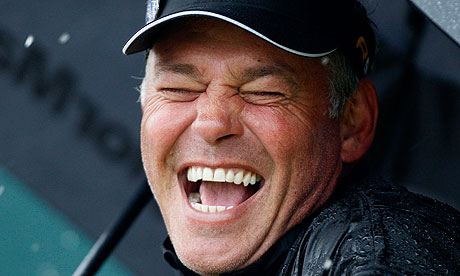
Darren Clarke's victory at the Open Championship was worth nearly $1.5 million, along with a $3.2 million bonus from one of his sponsors. And it sure won't mess up his plans to become a brand-name golf designer.

On that score, the golf pro from Northern Ireland has unveiled the design of his latest course, a “signature” track at the Angus, a resort community that's to be built on farmland just west of Carnoustie.


“When you first glimpse the landscape where the Angus will take shape, you can't help but feel you're somewhere Mother Nature intended for golf,” Clarke said in a press statement.

He added: “I can't wait to play it myself.”

Mike Forbes, the developer of the Angus, has allotted 200 acres for Clarke's course, which will stretch to 7,000 yards. As I noted in a post in March, on his remaining property Forbes plans to build 160 houses, a hotel, a spa, and a youth-oriented golf academy operated by Rudy Duran, one of Tiger Woods' childhood instructors.

Clarke's “ghost designer” is Graeme Webster of Niblick Golf Design in Moss, Norway. Webster and his associates, Clarke says, “have laid the foundations for the course by blending the classic traditions of golf with their innovative and exciting approach to course design.”

Webster has already designed one course for Forbes, a nine-hole track at the Forbes of Kingennie country resort in nearby Dundee.

Thursday, July 21, 2011

worth reading Golf's Money Kings

Which golf personalities cashed the biggest checks last year?

Well, the Sunday Business Post has compiled a list of golf's top money-earners in 2010, and it's full of familiar names. One thing they all have in common: They've all generated income via golf design, even if their designs weren't actually built.

Here's the Post's list, along with my edited version of the newspaper's comments about each member of the top 10. For the full monty, read “Golf's Biggest Hitters.”

1. Tiger Woods
On-course earnings: $2.3 million

Given the scandal he was embroiled in 18 months ago and the mediocre season that followed, it shouldn’t be a surprise that Tiger Woods’ overall earnings of $74 million were his lowest in a decade. Compared to 2009, when he made $121,915,196, Woods took a $48 million pay cut last year. . . . His prize money of $2.3 million was his lowest return since turning professional. . . . According to Forbes, Woods’ net worth is estimated at $500 million. The golfer has earned $130 million in career prize money and $900 million in revenue from endorsements, appearance fees, and his golf course design business since 1996.

2. Phil Mickelson
On-course earnings: $4.2 million
Off-course earnings: $36 million


Since turning pro in 1992, Mickelson has won prize money of $64 million -- more than anyone else, with the exception of Woods and Vijay Singh. Like Woods, however, Mickelson earns far more from commercial endorsements and private investments. Forbes’ recent rankings of the world’s wealthiest athletes placed Mickelson fifth, while Fortune claims that he is the second-richest sportsman in the world. His portfolio of deals stretches from banks to oil companies and includes a deal to promote Rolex watches. His most lucrative deals are with Callaway, which manufactures his playing equipment, and accountancy giant KPMG. He also has relationships with Barclays Bank and Exxon Mobile.

3. Arnold Palmer
On-course earnings: $0
Off-course earnings: $36 million


Generally regarded as one of the greatest players in the history of the sport, Arnold Palmer retired from professional golf in 2006


yet sits third on the list of golf’s high earners. This is a testament to the impact that the 81-year-old has had on the sport since winning his first professional tournament in 1955. . . . He helped to found the Golf Channel and acts as a consultant for the television station. Nicknamed “the King,” Palmer also negotiated the deal to build the first golf course in China. . . . Since 1971, he has owned Latrobe Country Club in Pittsburgh, and he is a part-owner of the renowned Pebble Beach course in California. Palmer has commercial interests with Rolex, Ketel One vodka, and aircraft company Cessna. He is also attached to several golf apparel labels, including Callaway, Lamkin, and E-Z-GO.

4. Greg Norman
On-course earnings: $9,270
Off-course earnings: $30 million


Although Greg Norman had a quiet 2010 playing season, the Great White Shark remains one of the sport’s highest earners due to a wide range of business and commercial interests. . . . Norman remains Australia’s wealthiest sportsman, with an estimated net worth of almost $300 million. . . . He was one of the first golfers in the world to capitalize on his brand and popularity, establishing his own line of sportswear in the early 1990s. Since then, his company, Great White Shark Enterprises, has diversified into a range of other industries, most of which are focused on golf and lifestyle. . . . He also has his own golf academy and a burgeoning turf business, which has provided grass seed and turf for events ranging from the Super Bowl to the Olympic Games. Then there is Greg Norman’s Australian Grill, a grill company he established to rival the George Foreman Grill. Norman also has a wine company which produces 3 million bottles of wine each year and a separate company that produces 90,000 kilograms of beef a year.

5. Jack Nicklaus
On-course earnings $175,000:
Off-course earnings: $25 million


Despite retiring six years ago and teeing off in only a handful of invitational golf tournaments last year, the man who usurped Palmer as the sport’s greatest player has remained in the top five high-earners due to his vast empire of commercial interests. . . . Named after his moniker, Golden Bear [International] is a conglomerate of golf-related businesses owned by Nicklaus. It runs golf instruction and practice centers, licenses Jack Nicklaus brand clothing and golf accessories, operates the Golden Bear Tour, and consults with golf course construction firms.

6. Jim Furyk
On-course earnings: $16.3 million
Off-course earnings: $7.3 million


After no wins for more than two seasons, Jim Furyk enjoyed a sensational season last year, with three wins on the PGA Tour helping him secure the PGA Tour Player of the Year award. . . . His on-course winnings of more than $16 million was far greater than any other golfer in 2010. . . . Furyk is the brand leader for Srixon, which designs his golf gear, along with Taylor Made, Adidas, and Chilliwear, which look after his on-course attire. He retains a long association with Reeses, Johnnie Walker, and Marquis Jet.

7. Ernie Els
On-course earnings: $7.5 million
Off-course earnings: $14 million


He is the leading career money winner on the European Tour and was the first member of the Tour to earn more than 25 million euros from European Tour events. With 64 professional wins, including three major championships since he turned professional in 1989, he has earned prize money of $47 million from golf. In 2007, he signed a multimillion-dollar deal with Calloway, which makes his clubs and provides his sports gear. He is also global ambassador for software giant SAP. In recent years, his biggest earner has been Ernie Els Designs, his golf design company. . . . He recently went into partnership with a South African wine company to develop Ernie Els wines.

8. Gary Player
On-course earnings: $14,350
Off-course earnings: $15 million


Like three of the top five high earners, Gary Player cements his place as one of the sport’s wealthiest beneficiaries without even having to swing a golf club. . . . His business interests are represented by Black Knight International, which includes Gary Player Design, Player Real Estate, and Black Knight Enterprises, aspects of which include licensing, events, publishing, wine, apparel, and memorabilia.

9. Lee Westwood
On-course earnings: $9.2 million
Off-course earnings: $5.5 million


Following a memorable 2009 season, Lee Westwood ended the reign of Tiger Woods by being crowned world number one last season. . . . Westwood’s total prize money stands at nearly $40 million. He has yet to win one of his sport’s majors but has come close several times. . . . Jaguar and French watchmaker Audemars Piquet handsomely reward Westwood for promotion of their brands, while deals with Oceanico Prestige Residence Club and financial services firm NYSE Euronext have also helped swell the 38-year-old’s bank balance.

10. Luke Donald
On-course earnings: $8.3 million
Off-course earnings: $4.2 million


Donald, in his 10th professional season, is now the top-ranked golfer in the world. . . . His $8.3 million prize money for the 2010 season was accumulated through a series of impressive performances, notably victory at the Madrid Masters. . . . His success over the past 18 months has helped his on-course career earnings soar to more than $26 million. He has had lucrative sponsorship deals, including one with the Royal Bank of Scotland that earned him $1.3 million in two years. . . . The bulk of his endorsement earnings derive from a multi-year contract with Mizuno.