In 2011, the U.S. golf industry had a direct economic impact of $68.8 billion and a total economic impact of $176.8 billion, according to Golf 20/20. “The economy has endured two significant recessions the past decade, and golf has fared well,” concluded an official from Golf 20/20. A press release points out that golf’s “core industries” -- things like golf facility operations and retail sales -- by themselves pack a stronger economic punch than spectator sports, the performing arts, and the amusement and recreation industries. It’s also worth noting that our business was responsible for 1.98 million jobs and $55.6 billion in wages.
Despite the wettest summer in 100 years, a survey by Sport England has determined that 850,500 people in England played golf at least once a week during the 12-month period that ended in October 2012. The number is said to be “steady” in comparison to the one posted in 2011 and proof of “how popular golf is when the weather is right,” according to an official with the England Golf Partnership. Monthly figures indicate that play increased during the relatively mild winter of 2011-12 but decreased when the rains came, particularly in April and June. “The weather has clearly influenced participation, and obviously that’s not something we can control,” the official said. “It is disappointing that the atrocious weather in spring and much of the summer coincided with the peak playing period.”
The 393 golf clubs in New Zealand are “losing members in the thousands,” according to a story by one of the nation’s television stations. 3 News says that New Zealand’s clubs have collectively lost 17,000 members over the past nine years, a fact labeled as “quite a concern” by the CEO of New Zealand Golf. The station also notes that New Zealand has the second-largest number of golf courses per capita in the world, a statement that might lead curious readers to wonder which nation finished higher. The answer comes from Aussie Golfer, which, citing a 2007 study by Golf Digest, says that Scotland has the largest number of golf courses per capita. The United States finished eighth on the list posted by Aussie Golfer, behind Australia, Ireland, Northern Ireland, Canada, and Wales.
In a report produced for the city of Portland, Maine, National Golf Foundation Consulting says that the average number of rounds played at an 18-hole course in the United States is now 32,497, down from more than 50,000 in 2000. An economist from the University of Maine told city officials that an 18-hole U.S. course rings up, on average, $1.46 million in revenues annually. Maine’s 18-hole courses generate somewhat less, about $1.32 million, probably due to the brevity of the state’s golf season.
Golfers who vacation in Ireland spend about three times as much as a typical tourist, according to research from Fáilte Ireland. Historically, most of the golfers who’ve vacationed in Ireland have come from the United States and the United Kingdom, but today they’re coming from other places as well. “We now see traffic coming from mainland Europe and China,” the general manager of a course in Kinsale told the Irish Examiner. “[In 2012] we had, for the first time, bookings from Turkey, and the Scandinavian market is also growing at a good pace.” The newspaper reported that golf travelers help to support 7,300 jobs in Ireland, and a tourism minister notes that “golfing visitors tend to play at more than one location, which creates a more dispersed pattern of spending.”
The U.S. golf business raised $3.9 billion for charities in 2011, according to Golf 20/20 and the National Golf Foundation. Most of the money was provided by 12 million golfers who played in 143,000 fund-raising golf tournaments at 11,800 facilities.
In an article decidedly unfriendly to the golf business, PolicyMic reports that the U.S. Department of Defense operates 234 golf courses in the United States and in other nations. The article estimates that the military spends more than $140 million a year to maintain its courses -- a piddling amount, if you think about it -- and contends that “continuing to spend a single dollar supporting the military’s golf courses is indefensible.” The article’s bottom line: “Our servicemen and women can surely unwind in some other way.”
Even though North Korea once had a leader (Kim Jong-il) who reportedly notched five holes in one the first time he played golf, the nation today has just 42 “registered” golfers, according to Golf magazine. North Korea has a population of 25 million.
Friday, January 11, 2013

Wednesday, January 9, 2013
montenegro Limon Zest
Will a small Dutch company become the biggest player in Montenegro’s slow-growing golf business?
LPGD, an affiliate of Limon Investments, has signed a 90-year lease on 195 acres of government-controlled property in Kavac, along the Bay of Kotor, where it plans to build Tivat National Golf Club. In addition, the company is trying to negotiate permission to build Danilovgrad Golf & Country Club along the Zeta River outside Danilovgrad, a northwestern suburb of Podgorica, the nation’s capital. Both facilities will feature an 18-hole, regulation-length golf course and a nine-hole “academy” course.
But those are merely the side dishes on LPGD’s plate. The company aims to put Montenegro on the world’s golf map with Luštica Golf & Leisure Resort, which has been master-planned with an eye-popping six golf courses. Chris Liebreks, the principal of Limon Investments, believes Luštica will be “one of Europe’s biggest and most beautiful golf and holiday destinations” and that it’ll attract up to 200,000 tourists a year all by itself.
What’s more, he’s keen to get on with it. “This project can start within one year,” Liebreks said at a news conference last year. “Our funders to invest in this venture are already very eager to start up with it.”
These projects are major undertakings for a firm that hardly anyone has ever heard of, especially when one considers that Montenegro doesn’t as yet have a single golf course. But LPGD has shown not just a commitment to golf development in Montenegro -- Liebreks has been laying a foundation for his golf projects for a decade -- but a willingness to take on partners as necessary. LPGD is undertaking Tivat National with a Montenegrin firm, Boka Group, and Luštica with a German firm, PDI.
Tivat National is expected to open in the spring of 2015. Its golf complex, like the one in Danilovgrad, will be designed by Steve Marnoch, an architect based in Derbyshire, England. Both facilities are expected to be part of resort communities with upscale housing, hotels, and spas.
The designers of Luštica’s golf courses haven’t yet been determined. The community, which will include houses and seven hotels, will take shape near the town of Seljanovo, not far from where Orascom Development Holding plans to build Luštica Bay and its Gary Player “signature” golf course. The neighborhood is also the home of Porto Montenegro, an uber-exclusive marina community that’s being developed by Peter Munk, a wealthy Canadian. LPGD had to out-bid Munk for the concession on Tivat National.
LPGD’s projects are fully supported by Montenegro’s government, which has been trying to spark golf development for years, in an effort to promote tourism. While its efforts haven’t yet produced a golf course, the nation nonetheless believes it can support as many as 15.
The original version of the preceding post first appeared in the November 2012 issue of the World Edition of the Golf Course Report. The World Edition profiled Luštica Bay in August 2012.
Sunday, January 6, 2013
The Week That Was, january 6, 2013
The government of Singapore’s investment arm appears to be closing in on its purchase of four high-profile U.S. golf venues. Last week, a deal was sealed to ensure that PGA West, the premier property under contract, will remain affiliated with the PGA of America until 2061. This licensing agreement is a key to PGA’s West’s value and one of the reasons that Singapore is willing to pay a $1.5 billion for Paulson & Company’s golf portfolio. In addition to PGA West, which features six “signature” 18-hole golf courses, John Paulson’s hedge fund is also selling the Greg Norman-designed Great White course at Doral Golf Resort in Miami, Florida; Arizona Biltmore Resort & Spa in Phoenix, with two 18-hole courses; and Grand Wailea Resort Hotel & Spa on Maui in Hawaii, which has three 18-hole courses plus two others at the adjacent Makena Beach & Golf Resort. The Singapore Investment Corporation agreed to buy Paulson’s properties at a recent auction. If the transaction closes, it’ll likely be the biggest sale of the year.
Jaime Ortiz-Patiño, one of the grand old men of golf, died last week in a hospital in Marbella, Spain. I didn’t know him personally but I certainly knew of him, for he was one of the best-known and best-liked people in Europe’s golf business. “In many ways, he has been the ‘soul’

of golf in Europe,” said the vice chairman of the European Tour, in a Tour-produced obituary. Ortiz-Patiño leaves an important legacy: Club de Golf Valderrama, his destination golf course in Andalusia, the venue where the Ryder Cup matches were first played in continental Europe. Those matches, in 1997, along with numerous other high-prestige events that were played on Valderrama’s Robert Trent Jones-designed golf course, put the Costa del Sol on the world’s golf map. A former golf writer for the Times summed up Ortiz-Patiño’s life this way: “Jimmy Patino had impeccable manners, endless charm, lots of money, and a determination to achieve whatever he set his mind to.” He was 82.
If you’re thinking that 2013 will be the year when Cuba finally starts to build some golf courses, you may have another think coming. Rob Sequin of the Havana Journal has concluded that all of the nation’s much-ballyhooed golf ventures have come to “a complete standstill” and that Cuba is “far, far away from breaking ground on any new golf courses.” Don’t say I didn’t warn you.
Greg Norman is peeved again, this time at Medalist Golf Course in Hobe Sound, Florida, which had the nerve to hire another architect to oversee some renovations. “It’s really a slap in the face at the end of the day,” Norman told Golf Digest. “It hurts a lot, to tell the truth.” To ease the pain, Norman, who once served as Medalist’s president, has demanded that the club return some of his memorabilia and stop marketing the track as a Greg Norman/Pete Dye co-design.
Speaking of Golf Digest, did you ever wonder about course #101 -- the “bubble” course that just missed being named to the magazine’s top 100 in the United States? Well, you don’t have to wonder anymore.
CIDCO has finally opened its golf course in suburban Mumbai, India, just five years later and seven holes fewer than originally planned. The golf course -- a “swanky” track, according to the Indian Express -- is in Kharghar, one of the 14 “nodes” of Navi Mumbai, a planned community that CIDCO is developing. The company had hoped to open an 18-hole course in 2008, but concerns about the loss of forests and the relocation of long-time residents in the area shrunk the amount of land available. So the current layout, co-designed by Phil Ryan and Robert Cairns of Victoria, Australia-based Pacific Coast Design, features just 11 holes. CIDCO hopes to complete the 18-hole track someday, but it likely won’t happen anytime soon.
Some information in the preceding post originally appeared in the November 2008 and October 2010 issues of the World Edition of the Golf Course Report.
Hacienda Santa Martina Nature Club & Golf Course, in suburban Santiago, Chile, has opened the second nine of its 18-hole golf course. The track has been designed by Randy Thompson, an architect based in Chile who apprenticed with Robert Von Hagge. Thompson has also produced courses in Argentina, Brazil, and Uruguay.
A golf club in Maryland has sued a nearby power company, alleging that its golf course has been damaged by coal fly ash produced by the utility. The lawsuit, filed by Walden Golf Club, claims that the water in its well contains abnormally high levels of toxins including aluminum, lead, vanadium, and nickel and that Constellation Power Generation allowed those metals to seep into the local ground water. “A golf course with toxic soil, dead or dying grass, and no access to non-contaminated irrigation water is valueless,” the lawsuit declares. The club has asked for $20 million in compensation.
In Friday’s blog, I mentioned that a California-based LLC has agreed to buy Club at Cordillera, in Colorado. I’m thinking that the transaction has closed, because the new owners have announced that Troon Golf will manage the facility.
Congratulations to Roland Nagel of Kirksville, Missouri, who played golf for the first time last week. “It was a good experience,” Nagel said after playing five holes at Kirksville Country Club. “I hit the ball better than what I thought I would.” I’d love to wish Nagel a long and happy relationship with our sport, but I don’t think it’s likely. He’s 91, and he isn’t sure if he’ll ever play again. He just wanted to check off an item on his bucket list. “I’m getting old,” he told a local newspaper. Aren't we all.
Jaime Ortiz-Patiño, one of the grand old men of golf, died last week in a hospital in Marbella, Spain. I didn’t know him personally but I certainly knew of him, for he was one of the best-known and best-liked people in Europe’s golf business. “In many ways, he has been the ‘soul’
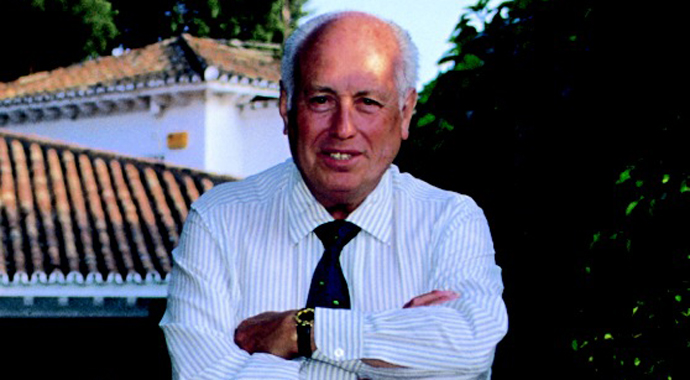
of golf in Europe,” said the vice chairman of the European Tour, in a Tour-produced obituary. Ortiz-Patiño leaves an important legacy: Club de Golf Valderrama, his destination golf course in Andalusia, the venue where the Ryder Cup matches were first played in continental Europe. Those matches, in 1997, along with numerous other high-prestige events that were played on Valderrama’s Robert Trent Jones-designed golf course, put the Costa del Sol on the world’s golf map. A former golf writer for the Times summed up Ortiz-Patiño’s life this way: “Jimmy Patino had impeccable manners, endless charm, lots of money, and a determination to achieve whatever he set his mind to.” He was 82.
If you’re thinking that 2013 will be the year when Cuba finally starts to build some golf courses, you may have another think coming. Rob Sequin of the Havana Journal has concluded that all of the nation’s much-ballyhooed golf ventures have come to “a complete standstill” and that Cuba is “far, far away from breaking ground on any new golf courses.” Don’t say I didn’t warn you.
Greg Norman is peeved again, this time at Medalist Golf Course in Hobe Sound, Florida, which had the nerve to hire another architect to oversee some renovations. “It’s really a slap in the face at the end of the day,” Norman told Golf Digest. “It hurts a lot, to tell the truth.” To ease the pain, Norman, who once served as Medalist’s president, has demanded that the club return some of his memorabilia and stop marketing the track as a Greg Norman/Pete Dye co-design.
Speaking of Golf Digest, did you ever wonder about course #101 -- the “bubble” course that just missed being named to the magazine’s top 100 in the United States? Well, you don’t have to wonder anymore.
CIDCO has finally opened its golf course in suburban Mumbai, India, just five years later and seven holes fewer than originally planned. The golf course -- a “swanky” track, according to the Indian Express -- is in Kharghar, one of the 14 “nodes” of Navi Mumbai, a planned community that CIDCO is developing. The company had hoped to open an 18-hole course in 2008, but concerns about the loss of forests and the relocation of long-time residents in the area shrunk the amount of land available. So the current layout, co-designed by Phil Ryan and Robert Cairns of Victoria, Australia-based Pacific Coast Design, features just 11 holes. CIDCO hopes to complete the 18-hole track someday, but it likely won’t happen anytime soon.
Some information in the preceding post originally appeared in the November 2008 and October 2010 issues of the World Edition of the Golf Course Report.
Hacienda Santa Martina Nature Club & Golf Course, in suburban Santiago, Chile, has opened the second nine of its 18-hole golf course. The track has been designed by Randy Thompson, an architect based in Chile who apprenticed with Robert Von Hagge. Thompson has also produced courses in Argentina, Brazil, and Uruguay.
A golf club in Maryland has sued a nearby power company, alleging that its golf course has been damaged by coal fly ash produced by the utility. The lawsuit, filed by Walden Golf Club, claims that the water in its well contains abnormally high levels of toxins including aluminum, lead, vanadium, and nickel and that Constellation Power Generation allowed those metals to seep into the local ground water. “A golf course with toxic soil, dead or dying grass, and no access to non-contaminated irrigation water is valueless,” the lawsuit declares. The club has asked for $20 million in compensation.
In Friday’s blog, I mentioned that a California-based LLC has agreed to buy Club at Cordillera, in Colorado. I’m thinking that the transaction has closed, because the new owners have announced that Troon Golf will manage the facility.
Congratulations to Roland Nagel of Kirksville, Missouri, who played golf for the first time last week. “It was a good experience,” Nagel said after playing five holes at Kirksville Country Club. “I hit the ball better than what I thought I would.” I’d love to wish Nagel a long and happy relationship with our sport, but I don’t think it’s likely. He’s 91, and he isn’t sure if he’ll ever play again. He just wanted to check off an item on his bucket list. “I’m getting old,” he told a local newspaper. Aren't we all.
Friday, January 4, 2013
Transactions, january 4, 2013
Toll Golf, an affiliate of the big home builder, has agreed to buy Snowmass Club outside Aspen, Colorado. “It’s a high-quality facility,” explained Toll Golf’s president, “and in a high-quality location.” The original golf course at Snowmass was co-designed by Arnold Palmer and Ed Seay and opened in 1980. In 2003, however, the layout was completely redesigned by Jim Engh. The club is being sold by Aspen Skiing Company, an entity controlled by the Crown family of Chicago. Last year Crown Golf Properties, the family’s golf operations group, sold its other golf property in Colorado, River Valley Ranch Golf Club in Carbondale. Toll Golf operates two dozen golf properties in Florida, Virginia, California, Nevada, Illinois, Pennsylvania, and other states, but Snowmass will be the only stand-alone golf property in its portfolio. The transaction is expected to close later this month.
Slowly but surely, the financial mess centered on Cordillera Golf Club is being cleaned up. At an auction late last year, a California-based investment group, Wind Rose Holdings LLC, agreed to buy the tony golf community in Edwards, Colorado, reportedly for $14.2 million. The sale, presuming it closes, ends Cordillera’s bankruptcy proceedings as well as all pending litigation between David Wilhelm, the community’s developer, and the club’s 600-plus members. Wind Rose intends to purchase Cordillera’s trio of 18-hole golf courses -- tracks designed by Tom Fazio, Jack Nicklaus, and Hale Irwin -- but the community’s Dave Pelz-designed “short” course will be turned over to the homeowners’ association. In recent years only the Fazio course has been open for play, and that will likely also be the case in 2013. For those of you who keep track of who’s trying to buy what, Donald Trump was among the three bidders for the property.
A company controlled by New Zealand’s richest family has purchased Pegasus Golf & Sports Club and its accompanying community in suburban Christchurch. Todd Property Group, the real estate arm of the Todd family, paid an undisclosed price for the property, which includes 300 houses and an 18-hole golf course that was co-designed by Kristine Kerr. The firm has promised to complete the build-out, which will require it to build a town center, a school, and more recreational amenities. The Todd family, led by recently knighted John Todd, is worth $2.7 billion, according to National Business Review. As best I can determine, this is the family’s first golf acquisition.
An affiliate of Oklahoma’s Cherokee Nation has paid more than $8 million for a 320-acre parcel in Tahlequah that includes Cherry Springs Golf Course. The property has been a source of friction for the sellers, who are members of the Berry family. “After several years of litigation, fighting over control of the property,” Brian Berry told a tribal newspaper, “we’ve finally come to an opportunity for the Berry family to go their separate ways.” The golf course was designed by Brian’s brother, Burl. The 6,814-yard track opened in 1989.
Two years after it filed for bankruptcy protection, Ford’s Colony Country Club in Williamsburg, Virginia has new owners. The club was purchased late last year by an unnamed group led by Accord Golf Capital and Och-Ziff Real Estate, a New York-based hedge fund. The new owners have hired Traditional Golf Management to operate the property’s three 18-hole courses, all of which were designed by Dan Maples. Traditional reportedly has an interest in Accord Golf Capital.
OnCourse Strategies, an Austin, Texas-based course owner and operator, has acquired its first golf property in Florida. In late 2012 the company paid $2 million for Sarasota’s Serenoa Golf Club, which had been foreclosed upon by its lender. The club features a golf course designed by Mark David Allen and is part of a 383-acre community that was begun by Cy Bispham. “We just saw good value, with a price that had potential to be a good investment for us,” J. Michael Ussery of OnCourse Strategies told the Sarasota Herald-Tribune. “The whole deal with being able to make a golf course profitable is first getting it at the right price, then having the expertise to operate it efficiently and effectively.” Ussery’s company has eight properties in Texas, among them WindRose Golf Club in Spring and Blackhawk Golf Club in Pflugerville.
Vanguard Golf Management and a partner have acquired Falcon Ridge Golf Course in Mesquite, Nevada. The course, which opened in two phases in the early 2000s, had been in financial trouble. The seller was a group led by Crescent Hardy, who co-designed the 6,550-yard layout with Kelby Hughes. Vanguard owns and/or operates four other golf properties, all of them in Utah. The group includes Thanksgiving Point Golf Club in Lehi and Sky Mountain Golf Course in Hurricane.
Lostwithiel Hotel Golf & Country Club, outside Bodmin in Cornwall, England, has an unidentified new owner. The sale was brokered by GVA, which reports that the club was purchased by “a local entrepreneur with existing experience in the golf and leisure sector.” Thanks for nothing, guys. The so-called entrepreneur bought a 5,984-yard course that opened in 1991, plus a 28-room hotel. The sale was one of four that GVA has completed since October 2012.
In mid November 2012, Jim McNair, Jr. acquired Golf Club at Cedar Creek in Aiken, South Carolina. McNair, the owner of Aiken Golf Club, plans to upgrade Cedar Creek’s 21-year-old, Arthur Hills-designed course. A group of home owners in the accompanying community helped to facilitate McNair’s purchase, as financing was reportedly hard to find.
A group led by Rick Orizotti and Terry O’Keefe has purchased the 400-acre Canyon River golf community in Missoula, Montana. Canyon River is anchored by an 18-hole, 6,966-yard course that was co-designed by Lee Schmidt and Brian Curley and opened in 2006. The community currently has about 60 houses, and the new owners hope to build 200 more.
In late 2012, affiliates of Meadowbrook Golf sold three golf properties in Florida: Tiger Point Golf Club in Gulf Breeze, Club at Hidden Creek in Navarre, and Shalimar Pointe Golf & Country Club in Shalimar. Textron Financial Corporation, Meadowbrook’s lender and a company that’s trying to exit the golf business, had set a deadline in late November for the sales.
Slowly but surely, the financial mess centered on Cordillera Golf Club is being cleaned up. At an auction late last year, a California-based investment group, Wind Rose Holdings LLC, agreed to buy the tony golf community in Edwards, Colorado, reportedly for $14.2 million. The sale, presuming it closes, ends Cordillera’s bankruptcy proceedings as well as all pending litigation between David Wilhelm, the community’s developer, and the club’s 600-plus members. Wind Rose intends to purchase Cordillera’s trio of 18-hole golf courses -- tracks designed by Tom Fazio, Jack Nicklaus, and Hale Irwin -- but the community’s Dave Pelz-designed “short” course will be turned over to the homeowners’ association. In recent years only the Fazio course has been open for play, and that will likely also be the case in 2013. For those of you who keep track of who’s trying to buy what, Donald Trump was among the three bidders for the property.
A company controlled by New Zealand’s richest family has purchased Pegasus Golf & Sports Club and its accompanying community in suburban Christchurch. Todd Property Group, the real estate arm of the Todd family, paid an undisclosed price for the property, which includes 300 houses and an 18-hole golf course that was co-designed by Kristine Kerr. The firm has promised to complete the build-out, which will require it to build a town center, a school, and more recreational amenities. The Todd family, led by recently knighted John Todd, is worth $2.7 billion, according to National Business Review. As best I can determine, this is the family’s first golf acquisition.
An affiliate of Oklahoma’s Cherokee Nation has paid more than $8 million for a 320-acre parcel in Tahlequah that includes Cherry Springs Golf Course. The property has been a source of friction for the sellers, who are members of the Berry family. “After several years of litigation, fighting over control of the property,” Brian Berry told a tribal newspaper, “we’ve finally come to an opportunity for the Berry family to go their separate ways.” The golf course was designed by Brian’s brother, Burl. The 6,814-yard track opened in 1989.
Two years after it filed for bankruptcy protection, Ford’s Colony Country Club in Williamsburg, Virginia has new owners. The club was purchased late last year by an unnamed group led by Accord Golf Capital and Och-Ziff Real Estate, a New York-based hedge fund. The new owners have hired Traditional Golf Management to operate the property’s three 18-hole courses, all of which were designed by Dan Maples. Traditional reportedly has an interest in Accord Golf Capital.
OnCourse Strategies, an Austin, Texas-based course owner and operator, has acquired its first golf property in Florida. In late 2012 the company paid $2 million for Sarasota’s Serenoa Golf Club, which had been foreclosed upon by its lender. The club features a golf course designed by Mark David Allen and is part of a 383-acre community that was begun by Cy Bispham. “We just saw good value, with a price that had potential to be a good investment for us,” J. Michael Ussery of OnCourse Strategies told the Sarasota Herald-Tribune. “The whole deal with being able to make a golf course profitable is first getting it at the right price, then having the expertise to operate it efficiently and effectively.” Ussery’s company has eight properties in Texas, among them WindRose Golf Club in Spring and Blackhawk Golf Club in Pflugerville.
Vanguard Golf Management and a partner have acquired Falcon Ridge Golf Course in Mesquite, Nevada. The course, which opened in two phases in the early 2000s, had been in financial trouble. The seller was a group led by Crescent Hardy, who co-designed the 6,550-yard layout with Kelby Hughes. Vanguard owns and/or operates four other golf properties, all of them in Utah. The group includes Thanksgiving Point Golf Club in Lehi and Sky Mountain Golf Course in Hurricane.
Lostwithiel Hotel Golf & Country Club, outside Bodmin in Cornwall, England, has an unidentified new owner. The sale was brokered by GVA, which reports that the club was purchased by “a local entrepreneur with existing experience in the golf and leisure sector.” Thanks for nothing, guys. The so-called entrepreneur bought a 5,984-yard course that opened in 1991, plus a 28-room hotel. The sale was one of four that GVA has completed since October 2012.
In mid November 2012, Jim McNair, Jr. acquired Golf Club at Cedar Creek in Aiken, South Carolina. McNair, the owner of Aiken Golf Club, plans to upgrade Cedar Creek’s 21-year-old, Arthur Hills-designed course. A group of home owners in the accompanying community helped to facilitate McNair’s purchase, as financing was reportedly hard to find.
A group led by Rick Orizotti and Terry O’Keefe has purchased the 400-acre Canyon River golf community in Missoula, Montana. Canyon River is anchored by an 18-hole, 6,966-yard course that was co-designed by Lee Schmidt and Brian Curley and opened in 2006. The community currently has about 60 houses, and the new owners hope to build 200 more.
In late 2012, affiliates of Meadowbrook Golf sold three golf properties in Florida: Tiger Point Golf Club in Gulf Breeze, Club at Hidden Creek in Navarre, and Shalimar Pointe Golf & Country Club in Shalimar. Textron Financial Corporation, Meadowbrook’s lender and a company that’s trying to exit the golf business, had set a deadline in late November for the sales.
Wednesday, January 2, 2013
kenya Here Comes the Big Money
One of the Middle East’s biggest developers has decided to make a splash in Kenya.
Dubai-based Emaar Properties plans to establish an eco-friendly resort, including an 18-hole golf course, in Narok County, in the southwestern part of the nation. The resort, called Enkereri Masa, will take shape in an as-yet unidentified town that’s said to be “on the fringes” of the Maasai Mara Game Reserve. The 580-square-mile Mara, as it’s called, is Africa’s best-known wildlife sanctuary and a popular vacation destination, primarily for safaris. Numerous hotels and campgrounds are operating in the area, but no golf courses of note.
Emaar is best-known as a developer of master-planned communities, some of them with golf courses. Its portfolio is highlighted by two prominent properties in Dubai: Arabian Ranches Golf Club, which features a “signature” course by Ian Baker-Finch (with assistance from Nicklaus Design), and the Montgomeie (Colin Montgomerie with Desmond Muirhead), the featured attraction of the Emirates Hills community.
The company also has a residential division in India, where it’s created Boulder Hills Golf & Country Club in Hyderabad, Andhra Pradesh. It hopes to build other courses in India, as well as tracks in Indonesia, Jordan, and Saudi Arabia.
Emaar’s latest venture is further evidence of Kenya’s arrival on the international golf scene. The nation currently has, give or take, 42 courses, and perhaps a dozen others are in planning or under construction.
In addition to its golf course, Enkereri Masa will feature a hotel and a spa, both of which could open as early as next year. Emaar is developing the property with the African Dream Collection, Ltd.
Enkereri Masa hasn’t yet been approved, however. Before Emaar and the African Dream get permission to begin construction, they’ll need to prove that their resort won’t damage the environment or drain the local water table.
The original version of the preceding post first appeared in the October 2012 issue of the World Edition of the Golf Course Report.
Dubai-based Emaar Properties plans to establish an eco-friendly resort, including an 18-hole golf course, in Narok County, in the southwestern part of the nation. The resort, called Enkereri Masa, will take shape in an as-yet unidentified town that’s said to be “on the fringes” of the Maasai Mara Game Reserve. The 580-square-mile Mara, as it’s called, is Africa’s best-known wildlife sanctuary and a popular vacation destination, primarily for safaris. Numerous hotels and campgrounds are operating in the area, but no golf courses of note.
Emaar is best-known as a developer of master-planned communities, some of them with golf courses. Its portfolio is highlighted by two prominent properties in Dubai: Arabian Ranches Golf Club, which features a “signature” course by Ian Baker-Finch (with assistance from Nicklaus Design), and the Montgomeie (Colin Montgomerie with Desmond Muirhead), the featured attraction of the Emirates Hills community.
The company also has a residential division in India, where it’s created Boulder Hills Golf & Country Club in Hyderabad, Andhra Pradesh. It hopes to build other courses in India, as well as tracks in Indonesia, Jordan, and Saudi Arabia.
Emaar’s latest venture is further evidence of Kenya’s arrival on the international golf scene. The nation currently has, give or take, 42 courses, and perhaps a dozen others are in planning or under construction.
In addition to its golf course, Enkereri Masa will feature a hotel and a spa, both of which could open as early as next year. Emaar is developing the property with the African Dream Collection, Ltd.
Enkereri Masa hasn’t yet been approved, however. Before Emaar and the African Dream get permission to begin construction, they’ll need to prove that their resort won’t damage the environment or drain the local water table.
The original version of the preceding post first appeared in the October 2012 issue of the World Edition of the Golf Course Report.
Subscribe to:
Posts (Atom)

 Posts
Posts

