The overall U.S. economy may still be in a funk, but wealthy Americans -- the golf industry’s best customers -- are spending money again, particularly on high-priced extravagances such as luxury automobiles, Harley-Davidson motorcycles, and recreational and all-terrain vehicles. “If you have a home and a stock portfolio, things are looking better,” an investment analyst told the Wall Street Journal. Citing U.S. Labor Department figures, the newspaper reports that the average American household spent $51,442 last year, an amount that surpasses the pre-recession peak. “I think people feel a little more secure,” said Winnebago’s sales manager. “The nerds and geeks are making tons of money,” said an economist at a Boston-based research firm. “We feel good about the fourth quarter,” said Whirlpool’s CEO. Although reading such tea leaves is risky business, with each passing day the evidence mounts: The foundation for a rebound in the golf business is being laid.
The Chinese may be getting serious about protecting their dwindling water resources. Six golf courses in Beijing, a city suffering from a drought, have been forced to close because they were “threatening the local water source in their respective areas,” according to China Radio International. The names of the courses haven’t been announced. A website called Beijing Golf Courses says that the capital city has between 60 and 73 courses and that local water officials have heretofore turned “a blind eye” to their water use.
Most companies in the golf industry continue to sing the Great Recession blues, but not Gary Player’s. Marc Player, the CEO of Black Knight International, tells Forbes that his father’s various golf endeavors will generate $36 million in revenues this year -- way more than the $14 million he earned during his 60-year career as a professional golfer. About one-third of the money ($13 million) will come from corporate sponsorships, licensing deals, and real estate ventures, Marc Player reports, but the rest of it is said to be coming from Black Knight’s golf design division, which offers three levels of service priced from $1 million to $3 million. As Forbes notes, the design division’s claim to $23 million in income is certain to raise eyebrows among golf course architects, whose fees have been drastically reduced in recent years. Without question, Player Design is busier these days than some of its rivals, but if a Gary Player “signature” layout can command $3 million in the international marketplace, then the firm’s main competition -- Jack Nicklaus and Greg Norman primary among them -- are going to have to drive a harder bargain.
The 95th PGA Championship was worth more to metropolitan Rochester, New York than anticipated. Greater Rochester Enterprise has determined that this year’s championship, which was played at Oak Hill Country Club, had an “economic impact” of more than $102 million, considerably more than the $78 million that had been expected. The economic-development agency says that the event attracted roughly 225,000 spectators, filled more than 4,900 hotel rooms, and generated $28 million in sales from tickets, concessions, merchandise, and corporate tents.
Another casualty of the Great Recession is being revived. Hunter’s Point Golf Course, in Nampa, Idaho, which was shuttered by financial troubles in April 2012, is being re-designed by a new ownership group and is expected to reopen in the spring of next year. Canyon County Golf Partners, which acquired the 150-acre property from M3 Corporation, reportedly includes Clint Travis and Jerry Breaux, the operators of BanBury Golf Course in Eagle, TimberStone Golf Course in Caldwell, and River Birch Golf Course in Star. Hunter’s Point was designed by Gene Bates and opened in 2009. The Idaho Press-Tribune reports that the new owners plan to change it “from a challenging private golf course to a public course with more of a fun factor.” They also plan to rename the course, but they haven’t yet revealed the new name.
The park commission in Morris County, New Jersey has decided to seek a private-sector operator for three of its golf properties. The commission plans to privatize Flanders Valley Golf Course in Flanders, Sunset Valley Golf Course in Pompton Plains, and Pinch Brook Golf Course in Florham Park, whose losses have helped to put the county’s golf operations into a $2 million hole. The commission’s chairman, John Sette, told the Newark Star-Ledger said the transfer of operations is necessary because “golf revenue isn’t what it used to be.” Last year, the commission turned over its other golf property, Berkshire Valley Golf Course in Jefferson, to Billy Casper Golf.
Seven golf management companies appear to have a serious interest in operating the city of Prescott, Arizona’s golf courses. Antelope Hills Golf Course has been losing money for much of the past decade, according to the Prescott Daily Courier, but the 36-hole facility (it features courses designed by Lawrence Hughes and Gary Panks) has nonetheless attracted the attention of a group that includes Billy Casper Golf, KemperSports Management, OB Sports, and Touchstone Golf. The newspaper says that the complex has been forced to borrow more than $4 million from the city’s general fund. The city, which will continue to maintain the complex, is offering a 10-year contract. It expects to have an operator in place in February 2014.
Spain remains the favorite destination for traveling golfers from select parts of Europe, according to a survey commissioned by Reed Travel Exhibitions. Spain was the top choice among 28.5 percent of the respondents from the United Kingdom, France, Germany, and Scandinavia who took a golf vacation within the past 12 months. The runner-up was Portugal (17 percent), followed closely by Great Britain and Ireland (16 percent) and distantly by Turkey, France, and the United States. The typical golfer who visits Spain spends between $234 (by the British) to $317 (by Scandinavians) per day and plays between five and six rounds of golf on as many as four courses during his or her holiday.
Sensing a career opportunity, the head of Thomson Perrett & Lobb’s architectural practice in Cape Town, South Africa has hung out his own shingle. “Africa is a huge potential market for golf and will give rise to some amazing courses in the future,” believes Andrew Goosen, who’s chosen to operate as Morris Golf Company. In a press announcement, Goosen explains that “classical principles of golf design” -- he cites Harry Colt, Alister MacKenzie, and Old Tom Morris as inspirations -- will serve as the foundation for his work. “I want to build courses that are strategic and that reward bold, high-quality play while still being a fun day out for ordinary players,” he said. “Africa does not need a flood of huge ‘championship’ courses that are unplayable for anyone who is not highly skilled.” Goosen is currently working on projects in South Africa and Swaziland.
Sunday, October 27, 2013

Friday, October 25, 2013
Transactions, october 25, 2013
An investment group led by a pair of corporate Colorado’s female VIPs has purchased Garden of the Gods Club, one of the elite golf properties in Colorado Springs. Brenda Smith and Judy Mackey -- the former is an accountant, the latter a health-care professional -- reportedly paid $10.3 million for Garden of the Gods, which competes for members primarily with the Broadmoor, a Western icon. The seller, an LLC led by Sunrise Company, was hoping to get $14 million for the property, which was unfortunately showing too much age. The new owners have hired Gemstone Hotels & Resorts to manage the club and restore its membership, which peaked at roughly 3,300 in 2000 but has fallen to 1,500. As part of that effort, $6 million will be spent on a new wellness center and improvements to the club’s facilities, including the golf complex. “We really want to elevate the member experience,” Smith told the Colorado Springs Gazette. Garden of the Gods features a 27-hole golf complex, a lodge with 66 guest rooms, a recreation center, and a 21,000-square-foot golf clubhouse. J. Press Maxwell designed the club’s original 18, which opened in 1961.
Bob Parsons has a flair for promotion and is willing to air borderline offensive Super Bowl ads, but can he revive a struggling golf club? We’ll soon find out, because the founder of GoDaddy, the website hosting company, has purchased a club he belongs to, Golf Club Scottsdale in suburban Phoenix, Arizona. Parsons has given the 10-year-old property a new name, Scottsdale National Golf Club, but he hasn’t yet announced how he’ll meet his major challenge, which will be to sign roughly 200 new members. Discounting, one of his pet strategies, may no longer be an option, as the club has already slashed its initiation fee from $110,000 to $25,000, and ancillary development on the 292-acre property might ruin the vibe. But Scottsdale National’s existing members need not fret. The club still has a highly regarded golf course that was co-designed by Jay Morrish and Dick Bailey, and it now also has the force of Parsons’ personality, not to mention his $1.9 billion fortune.
World Capital Market, Inc., an entity led by Xu Ming, has acquired its second golf property in California. In August, the merchant banking firm reportedly paid $6.5 million for Golf Club at Glen Ivy in Corona. A month later, it bought Links at Summerly, an 18-hole, Cal Olson-designed track in Lake Elsinore. The latter is part of a 1,481-acre community that’s being developed by McMillin Companies, the seller. WCM says that it has a presence in Beijing, Shanghai, and four U.S. cities, Los Angeles among them. Xu (everyone calls him “Phil,” apparently) describes himself as “a serial successful technology entrepreneur,” a philanthropist, and an ordained minister with 30,000 followers.
Golden Horse Holdings, the Hong Kong-based entity that owns Dragon Lake Golf Club in Guangzhou, China, is closing in on its second golf property in Queensland, Australia. Golden Horse has agreed to buy the available equity memberships in Links Hope Island, a purchase that will effectively give it control of the 20-year-old club. Links Hope Island, the centerpiece of the Gold Coast’s Hope Island Resort, features an 18-hole course that was co-designed by Peter Thomson and Michael Wolveridge. Golden Horse has also agreed to buy some property at the resort on which it plans to build 29 houses and a 400-room hotel. In August, Golden Horse agreed to buy Noosa Springs Golf & Spa Resort, which features an 18-hole golf course designed by Graham Papworth. The Gold Coast Bulletin reports that the $15 million Noosa Springs transaction hasn’t yet closed.
The Swinomish Indian Tribal Community has acquired a 250-acre parcel it’s sought since 1873, and the site comes with a bonus: Similk Beach Golf Course. For the tribe, the transaction is truly historic. The property, in Anacortes, Washington, was removed from its reservation via an executive order signed by President Ulysses S. Grant. Since the early 20th century, the land has been owned by the Morgan-Turner family. “I get choked up just thinking about how many generations of Swinomish people have waited for this day,” said Tribal Chairman Brian Cladoosby. The Skagit Valley Herald reports that tribe intends to continue operating the course, which opened in 1945.
A group of 44 investors in Foley, Alabama have acquired one of Textron Financial Corporation’s unwanted assets. Changing hands is GlenLakes Golf Club, a property that Textron claimed in 2008, when it assumed control of 14 golf properties owned by LinksCorp Holdings. The club, which opened in the mid 1980s, features an 18-hole course that was co-designed by Bruce Devlin and Robert Von Hagge as well as a nine-hole course. It reportedly has 160 members, and its 27-hole golf complex sees 35,000 rounds a year. The new owners plan to spiff up the clubhouse and, according to the Foley Onlooker, “improve the look” of the golf course. “We want to take it back to the presentable condition that it was,” the club’s new president said. The selling price hasn’t been disclosed, but Textron was asking for $2.3 million.
The city of Fosston, Minnesota has purchased a 180-acre parcel that includes a nine-hole golf course. For the time being, Fosston Golf Club will remain open, operated by a recently created association of golfers from the area. If the 50-year-old course becomes a financial drain, however, it appears that the city won’t hesitate to close it. “We all believe that it’s important to have a golf course as an amenity for our residents,” Mayor Jim Offerdahl told the Grand Forks Herald. “But if it doesn’t operate successfully, the land is valuable for other development.” The city paid $350,000 for the property. The seller was Greg Mireault, a PGA pro who also owns a local furniture store.
The Virginia State Golf Association Foundation has sold its 27-hole golf complex in Midlothian to a group that believes it’s an ideal place not just for golf but for things like cooking classes, wine tastings, and music camps. Pros, Inc., a Richmond-based sports marketing firm, views Independence Golf Club as “an event venue” whose golf and non-golf assets can be “monetized.” Those assets include Tom Fazio-designed 18-hole and nine-hole par-3 tracks, an auditorium, three dormitories, and two cottages. The new owners aim to add a golf academy and to sell what the Richmond Times Dispatch calls “truncated,” low-cost rounds on the golf courses. “It’s time to find ways to make the sport more inviting,” said Giff Breed, the president of Pros, Inc. A spokesman for the foundation said that it believes the new owners’ plans are “fantastic.”
Bob Parsons has a flair for promotion and is willing to air borderline offensive Super Bowl ads, but can he revive a struggling golf club? We’ll soon find out, because the founder of GoDaddy, the website hosting company, has purchased a club he belongs to, Golf Club Scottsdale in suburban Phoenix, Arizona. Parsons has given the 10-year-old property a new name, Scottsdale National Golf Club, but he hasn’t yet announced how he’ll meet his major challenge, which will be to sign roughly 200 new members. Discounting, one of his pet strategies, may no longer be an option, as the club has already slashed its initiation fee from $110,000 to $25,000, and ancillary development on the 292-acre property might ruin the vibe. But Scottsdale National’s existing members need not fret. The club still has a highly regarded golf course that was co-designed by Jay Morrish and Dick Bailey, and it now also has the force of Parsons’ personality, not to mention his $1.9 billion fortune.
World Capital Market, Inc., an entity led by Xu Ming, has acquired its second golf property in California. In August, the merchant banking firm reportedly paid $6.5 million for Golf Club at Glen Ivy in Corona. A month later, it bought Links at Summerly, an 18-hole, Cal Olson-designed track in Lake Elsinore. The latter is part of a 1,481-acre community that’s being developed by McMillin Companies, the seller. WCM says that it has a presence in Beijing, Shanghai, and four U.S. cities, Los Angeles among them. Xu (everyone calls him “Phil,” apparently) describes himself as “a serial successful technology entrepreneur,” a philanthropist, and an ordained minister with 30,000 followers.
Golden Horse Holdings, the Hong Kong-based entity that owns Dragon Lake Golf Club in Guangzhou, China, is closing in on its second golf property in Queensland, Australia. Golden Horse has agreed to buy the available equity memberships in Links Hope Island, a purchase that will effectively give it control of the 20-year-old club. Links Hope Island, the centerpiece of the Gold Coast’s Hope Island Resort, features an 18-hole course that was co-designed by Peter Thomson and Michael Wolveridge. Golden Horse has also agreed to buy some property at the resort on which it plans to build 29 houses and a 400-room hotel. In August, Golden Horse agreed to buy Noosa Springs Golf & Spa Resort, which features an 18-hole golf course designed by Graham Papworth. The Gold Coast Bulletin reports that the $15 million Noosa Springs transaction hasn’t yet closed.
The Swinomish Indian Tribal Community has acquired a 250-acre parcel it’s sought since 1873, and the site comes with a bonus: Similk Beach Golf Course. For the tribe, the transaction is truly historic. The property, in Anacortes, Washington, was removed from its reservation via an executive order signed by President Ulysses S. Grant. Since the early 20th century, the land has been owned by the Morgan-Turner family. “I get choked up just thinking about how many generations of Swinomish people have waited for this day,” said Tribal Chairman Brian Cladoosby. The Skagit Valley Herald reports that tribe intends to continue operating the course, which opened in 1945.
A group of 44 investors in Foley, Alabama have acquired one of Textron Financial Corporation’s unwanted assets. Changing hands is GlenLakes Golf Club, a property that Textron claimed in 2008, when it assumed control of 14 golf properties owned by LinksCorp Holdings. The club, which opened in the mid 1980s, features an 18-hole course that was co-designed by Bruce Devlin and Robert Von Hagge as well as a nine-hole course. It reportedly has 160 members, and its 27-hole golf complex sees 35,000 rounds a year. The new owners plan to spiff up the clubhouse and, according to the Foley Onlooker, “improve the look” of the golf course. “We want to take it back to the presentable condition that it was,” the club’s new president said. The selling price hasn’t been disclosed, but Textron was asking for $2.3 million.
The city of Fosston, Minnesota has purchased a 180-acre parcel that includes a nine-hole golf course. For the time being, Fosston Golf Club will remain open, operated by a recently created association of golfers from the area. If the 50-year-old course becomes a financial drain, however, it appears that the city won’t hesitate to close it. “We all believe that it’s important to have a golf course as an amenity for our residents,” Mayor Jim Offerdahl told the Grand Forks Herald. “But if it doesn’t operate successfully, the land is valuable for other development.” The city paid $350,000 for the property. The seller was Greg Mireault, a PGA pro who also owns a local furniture store.
The Virginia State Golf Association Foundation has sold its 27-hole golf complex in Midlothian to a group that believes it’s an ideal place not just for golf but for things like cooking classes, wine tastings, and music camps. Pros, Inc., a Richmond-based sports marketing firm, views Independence Golf Club as “an event venue” whose golf and non-golf assets can be “monetized.” Those assets include Tom Fazio-designed 18-hole and nine-hole par-3 tracks, an auditorium, three dormitories, and two cottages. The new owners aim to add a golf academy and to sell what the Richmond Times Dispatch calls “truncated,” low-cost rounds on the golf courses. “It’s time to find ways to make the sport more inviting,” said Giff Breed, the president of Pros, Inc. A spokesman for the foundation said that it believes the new owners’ plans are “fantastic.”
Sunday, October 20, 2013
The Week That Was, october 20, 2013
All that glitters may not be gold, but Donald Trump’s golf venue in Scotland continues to sparkle. Last year, the value of Trump International Golf Links Scotland increased by more than £8 million (nearly $13 million), from £20.3 million ($32.8 million) to £28.4 million ($45.9 million).
Spanish Peaks, a private golf and ski community in Big Sky, Montana, has closed, and its owners may file for bankruptcy protection, according to a letter addressed to property owners. Scott Johnson, the community’s general manager, blamed its financial troubles on “the long and protracted recession” and a resulting lack of real estate sales. It’s possible, however, that prospective home buyers had others reasons to steer clear of Spanish Peaks. Earlier this year, the Bozeman Daily Chronicle reports, a local court determined that the community “deceived customers when it didn’t tell them that pricey lots they were buying were located on active landslides.” Ironically, Spanish Peaks has closed just a month after a press release with Johnson’s name on it said that there’s “a bunch of positive ‘mojo’ going on in our little community.” The press release also credited Cross Harbor Capital, the owner of Spanish Peaks and the nearby Yellowstone Club, with the revival taking place in Big Sky. So maybe you can’t have a rosy future without a few thorns.
A Manhattan-based restaurateur has unveiled plans to revive the defunct Big Vanilla resort outside Fallsburg, New York, in the heart of what used to be the Borscht Belt. Misa Chang, who owns a chain of Szechuan eateries, bought the property that will become the Davos Resort USA sometime around the turn of the century. To create what the Middletown Times Herald-Record calls “a destination for people interested in healthy living,” Chang plans to build a new ski lodge and to add a 101-room hotel, a winery, and an 18-hole golf course surrounded by 100 condos. Chinese investors are expected to finance the construction, via the U.S. government program that trades green cards for big-money investments that create jobs.
Say what you want about Donald Trump, but the bottom line is that he gets things done. A case in point is the finally completed Jack Nicklaus “signature” golf course in Ferry Point Park, which New York City has had in some stage of planning or construction for well over a decade. Nicklaus told the Wall Street Journal that Trump, who got involved in the project in 2010, “did a really good job of getting it to the finish line,” and Trump didn’t disagree, saying, “I sent the roughest guys there. I sent construction guys that eat nails.” The 7,365-yard track, which has been designed to serve as a venue for professional tournaments, will get a soft opening next year and have its official debut in 2015. Naturally, Trump believes it’ll be “one of the top golf courses in the United States and, indeed, the world.”
Later this week, elected officials in St. Paul, Minnesota may agree to seek private-sector operators for two of their three golf properties. The number of rounds played at the city’s courses has fallen by 27 percent since 2005, and this year the trio -- Como Golf Course, Phalen Golf Course, and the 27-hole Highland National golf complex -- are expected to lose $1 million. “Running golf courses in St. Paul has been a big loser since 2005, to the tune of several hundred thousand dollars a year,” a spokesman for the parks and recreation department told the St. Paul Pioneer Press. “We’ve been looking at ways to make it successful, and it just hasn't been.” If the city council approves a proposal that’s been put on the table, the 18-hole Como and Phalen courses will be put out for bid. For now, the parks and recreation department plans to continue operating the courses in Highland Park -- the newspaper says they’re “on slightly better financial footing” -- but they may eventually need professional help as well.
If a wind farm in the ocean off Trump International Golf Links Scotland would inevitably destroy Scotland’s tourism industry, as Donald Trump insists, what will be the impact of a wind farm within view of the Old Course at St. Andrews? St. Andrews University has secured government approval to build a half-dozen wind turbines, each of them 328 feet tall, just three miles from the world’s most revered links. The turbines will be visible from several areas of the course. The university’s proposal has been controversial, but the Daily Telegraph reports that the St. Andrews Trust, the entity that manages St. Andrews’ seven courses, “did not object to the wind farm” and is “relaxed about the decision.”
Blackstone Group has found a buyer for the Waldorf Astoria in Naples, Florida. Northwood Investors, a real estate investment group, has purchased the resort-style hotel, whose featured attraction is the 13-year-old Naples Grande Golf Course. According to WorldGolf.com, Naples Grande’s Rees Jones-designed track is an “old-fashioned parkland layout” with traits that golfers “used to love but which have largely disappeared from the modern course-design lexicon,” in particular “small greens that are treacherous if you miss long.” The company that marketed the property views the sale as evidence of the growing appeal that luxury hotels have for foresighted investors. “The market for Florida oceanfront resorts is not only back, it’s thriving at a level that we have not seen since 2006 or 2007,” said Daniel Peek of HFF. “The story is not just about Miami anymore. Investors and lenders are competing to enter all of the resort markets across the state.” The terms of the sale haven’t been revealed.
The city of Casselberry, Florida is thinking about buying a financially challenged golf course, secure in the knowledge that the track will almost certainly lose money every year for the foreseeable future. A consultant has determined that the city will lose $200,000 a year, and maybe more, if it buys Casselberry Golf Club, a nearly 70-year-old facility that needs capital improvements. Nonetheless, the city believes it has a compelling reason to begin negotiations, because a purchase would preserve open space and prevent the course’s ownership group from developing the property, as it aims to do. Before a check is written, however, city officials must answer a critical question: Would the purchase benefit the community at large or merely the 200 home owners who live immediately adjacent to the course?
This week, the nation’s first and still best golf trail celebrates a major milestone. The 21-year-old Robert Trent Jones Golf Trail, Alabama’s only true claim to fame, will ring up its 10 millionth round. If the rounds had been distributed equally, and if the courses had all opened at the same time, each of the 11 properties on the trail would’ve attracted 909,090 rounds. If you’re wondering, that’s almost 43,300 rounds a year.
Spanish Peaks, a private golf and ski community in Big Sky, Montana, has closed, and its owners may file for bankruptcy protection, according to a letter addressed to property owners. Scott Johnson, the community’s general manager, blamed its financial troubles on “the long and protracted recession” and a resulting lack of real estate sales. It’s possible, however, that prospective home buyers had others reasons to steer clear of Spanish Peaks. Earlier this year, the Bozeman Daily Chronicle reports, a local court determined that the community “deceived customers when it didn’t tell them that pricey lots they were buying were located on active landslides.” Ironically, Spanish Peaks has closed just a month after a press release with Johnson’s name on it said that there’s “a bunch of positive ‘mojo’ going on in our little community.” The press release also credited Cross Harbor Capital, the owner of Spanish Peaks and the nearby Yellowstone Club, with the revival taking place in Big Sky. So maybe you can’t have a rosy future without a few thorns.
A Manhattan-based restaurateur has unveiled plans to revive the defunct Big Vanilla resort outside Fallsburg, New York, in the heart of what used to be the Borscht Belt. Misa Chang, who owns a chain of Szechuan eateries, bought the property that will become the Davos Resort USA sometime around the turn of the century. To create what the Middletown Times Herald-Record calls “a destination for people interested in healthy living,” Chang plans to build a new ski lodge and to add a 101-room hotel, a winery, and an 18-hole golf course surrounded by 100 condos. Chinese investors are expected to finance the construction, via the U.S. government program that trades green cards for big-money investments that create jobs.
Say what you want about Donald Trump, but the bottom line is that he gets things done. A case in point is the finally completed Jack Nicklaus “signature” golf course in Ferry Point Park, which New York City has had in some stage of planning or construction for well over a decade. Nicklaus told the Wall Street Journal that Trump, who got involved in the project in 2010, “did a really good job of getting it to the finish line,” and Trump didn’t disagree, saying, “I sent the roughest guys there. I sent construction guys that eat nails.” The 7,365-yard track, which has been designed to serve as a venue for professional tournaments, will get a soft opening next year and have its official debut in 2015. Naturally, Trump believes it’ll be “one of the top golf courses in the United States and, indeed, the world.”
Later this week, elected officials in St. Paul, Minnesota may agree to seek private-sector operators for two of their three golf properties. The number of rounds played at the city’s courses has fallen by 27 percent since 2005, and this year the trio -- Como Golf Course, Phalen Golf Course, and the 27-hole Highland National golf complex -- are expected to lose $1 million. “Running golf courses in St. Paul has been a big loser since 2005, to the tune of several hundred thousand dollars a year,” a spokesman for the parks and recreation department told the St. Paul Pioneer Press. “We’ve been looking at ways to make it successful, and it just hasn't been.” If the city council approves a proposal that’s been put on the table, the 18-hole Como and Phalen courses will be put out for bid. For now, the parks and recreation department plans to continue operating the courses in Highland Park -- the newspaper says they’re “on slightly better financial footing” -- but they may eventually need professional help as well.
If a wind farm in the ocean off Trump International Golf Links Scotland would inevitably destroy Scotland’s tourism industry, as Donald Trump insists, what will be the impact of a wind farm within view of the Old Course at St. Andrews? St. Andrews University has secured government approval to build a half-dozen wind turbines, each of them 328 feet tall, just three miles from the world’s most revered links. The turbines will be visible from several areas of the course. The university’s proposal has been controversial, but the Daily Telegraph reports that the St. Andrews Trust, the entity that manages St. Andrews’ seven courses, “did not object to the wind farm” and is “relaxed about the decision.”
Blackstone Group has found a buyer for the Waldorf Astoria in Naples, Florida. Northwood Investors, a real estate investment group, has purchased the resort-style hotel, whose featured attraction is the 13-year-old Naples Grande Golf Course. According to WorldGolf.com, Naples Grande’s Rees Jones-designed track is an “old-fashioned parkland layout” with traits that golfers “used to love but which have largely disappeared from the modern course-design lexicon,” in particular “small greens that are treacherous if you miss long.” The company that marketed the property views the sale as evidence of the growing appeal that luxury hotels have for foresighted investors. “The market for Florida oceanfront resorts is not only back, it’s thriving at a level that we have not seen since 2006 or 2007,” said Daniel Peek of HFF. “The story is not just about Miami anymore. Investors and lenders are competing to enter all of the resort markets across the state.” The terms of the sale haven’t been revealed.
The city of Casselberry, Florida is thinking about buying a financially challenged golf course, secure in the knowledge that the track will almost certainly lose money every year for the foreseeable future. A consultant has determined that the city will lose $200,000 a year, and maybe more, if it buys Casselberry Golf Club, a nearly 70-year-old facility that needs capital improvements. Nonetheless, the city believes it has a compelling reason to begin negotiations, because a purchase would preserve open space and prevent the course’s ownership group from developing the property, as it aims to do. Before a check is written, however, city officials must answer a critical question: Would the purchase benefit the community at large or merely the 200 home owners who live immediately adjacent to the course?
This week, the nation’s first and still best golf trail celebrates a major milestone. The 21-year-old Robert Trent Jones Golf Trail, Alabama’s only true claim to fame, will ring up its 10 millionth round. If the rounds had been distributed equally, and if the courses had all opened at the same time, each of the 11 properties on the trail would’ve attracted 909,090 rounds. If you’re wondering, that’s almost 43,300 rounds a year.
Friday, October 18, 2013
Vital Signs, october 18, 2013
When it comes to golf, the world is composed largely of haves and have-nots. From Afghanistan to Zimbabwe, the National Golf Foundation counts nearly 35,000 golf facilities. Of the world-wide total, an estimated 16,500 (47 percent) are in the United States. The remaining 18,350 can be found in 200 other countries, but they’re concentrated in a relative handful of places. According to the NGF’s international database, 70 percent of the golf facilities outside the United States can be found in just 10 nations, while 85 percent are in just 20 nations. In other words, about 32,000 of the world’s 35,000 golf facilities are in the United States and 20 other countries.
Speaking of haves and have-nots, the bank accounts and investment portfolios of affluent Americans, the prime market for golf, are recovering nicely. Between 2009 and 2011, the first two years of the U.S. economic revival, the mean net worth of the 8 million households in the upper 7 percent of the wealth spectrum rose by an estimated 28 percent, according to an analysis of Census Bureau data by the Pew Research Center. In dollar amounts, the mean net worth of these households increased from an estimated $2,476,244 to an estimated $3,173,895. The increases, Pew says, result primarily from gains in the stock market. For comparison’s sake, during this period the mean net worth of households in the lower 93 percent of the income scale declined by 4 percent, from $139,896 to $133,817, mostly because their net worth is tied closely to the value of their homes. For the golf industry, the message ought to be clear: The money is out there, and, because 2012 and 2013 have also been good years on Wall Street, it’s even bigger today than it was in 2011.
Female corporate executives have apparently discovered what their male counterparts have known for decades: Golf is good for business. According to a survey of 1,000 “career women” by the Executive Women’s Golf Association, 73 percent believe that playing golf has helped them network and develop new business relationships, while 22 percent say that they’ve actually closed business deals on a golf course. “Golf is time consuming, but what I discovered was the opportunities I was missing out on because I didn’t play,” a retired female bank executive told the Toledo Blade. As so many observers have noted, women are a particularly underserved market in golf. The Blade reports that our nation has only 6 million female golfers, a number that represents a mere 6 percent of the total U.S. golf universe.
Financially speaking, sunnier days may be on the horizon for Great Britain’s golf clubs. Ninety percent of the golfers who currently belong to clubs expect to renew their memberships in 2014, while only 3 percent have decided to quit. The remaining 7 percent are undecided. “It’s still early days, but these figures suggest something more than simply the green shoots of recovery in golf,” said Barry Dyett, the managing director of HowDidiDo Media. “If only 3 percent of current members say they won’t be renewing their membership, that surely suggests that the industry is doing something right and augurs well for the future.” HowDidiDo, which describes itself as “Europe’s largest golfing community,” gathered the results from a poll of nearly 2,500 club golfers. The respondents consisted of both men and women.
Can the golf industry really generate more play by promoting nine-hole rounds? According to the National Golf Foundation, 27 percent of U.S. golfers believe that golf is an 18-hole game and simply won’t play nine-hole rounds, while 5 percent play nine-hole rounds exclusively. Of the remaining golfers -- 68 percent of the nation’s total -- roughly three of every four already play nine-hole rounds on occasion. Given these statistics, how significant can the growth in nine-hole rounds be?
A series of newspaper articles about the impact golf courses are having on the water supply in California’s Coachella Valley has lit a fire under local water officials. “Everybody’s talking about the golf courses,” one of them acknowledged to the Desert Sun. While the valley’s residents come to grips with the fact that each course in the valley soaks up 325 million gallons of water a year -- enough to supply 1,400 houses -- the water district is trying to figure out how to accelerate its efforts to connect more than 100 courses to the reclaimed water (or to water from the Colorado River) that’s already available in the area. The task won’t be easy, because many of the valley’s courses are under financial strain and can’t afford to hook up on their own. But the valley is going dry, and if the local golf industry wants to maintain good relations in the community, it needs to solve this problem soon.
Tourism officials in Thailand are beginning to appreciate the value of vacationing golfers. Of the 22 million tourists who visited Thailand last year, nearly 737,900 (3 percent) were golfers, and they contributed an estimated 10.54 billion Baht ($339.5 million) to the Thai economy. Thailand expects to welcome 24 million tourists in 2013. If the ratio of golfers and spending remains the same, the visitors will include more than 815,000 golfers who’ll spend $374.9 million.
Speaking of haves and have-nots, the bank accounts and investment portfolios of affluent Americans, the prime market for golf, are recovering nicely. Between 2009 and 2011, the first two years of the U.S. economic revival, the mean net worth of the 8 million households in the upper 7 percent of the wealth spectrum rose by an estimated 28 percent, according to an analysis of Census Bureau data by the Pew Research Center. In dollar amounts, the mean net worth of these households increased from an estimated $2,476,244 to an estimated $3,173,895. The increases, Pew says, result primarily from gains in the stock market. For comparison’s sake, during this period the mean net worth of households in the lower 93 percent of the income scale declined by 4 percent, from $139,896 to $133,817, mostly because their net worth is tied closely to the value of their homes. For the golf industry, the message ought to be clear: The money is out there, and, because 2012 and 2013 have also been good years on Wall Street, it’s even bigger today than it was in 2011.
Female corporate executives have apparently discovered what their male counterparts have known for decades: Golf is good for business. According to a survey of 1,000 “career women” by the Executive Women’s Golf Association, 73 percent believe that playing golf has helped them network and develop new business relationships, while 22 percent say that they’ve actually closed business deals on a golf course. “Golf is time consuming, but what I discovered was the opportunities I was missing out on because I didn’t play,” a retired female bank executive told the Toledo Blade. As so many observers have noted, women are a particularly underserved market in golf. The Blade reports that our nation has only 6 million female golfers, a number that represents a mere 6 percent of the total U.S. golf universe.
Financially speaking, sunnier days may be on the horizon for Great Britain’s golf clubs. Ninety percent of the golfers who currently belong to clubs expect to renew their memberships in 2014, while only 3 percent have decided to quit. The remaining 7 percent are undecided. “It’s still early days, but these figures suggest something more than simply the green shoots of recovery in golf,” said Barry Dyett, the managing director of HowDidiDo Media. “If only 3 percent of current members say they won’t be renewing their membership, that surely suggests that the industry is doing something right and augurs well for the future.” HowDidiDo, which describes itself as “Europe’s largest golfing community,” gathered the results from a poll of nearly 2,500 club golfers. The respondents consisted of both men and women.
Can the golf industry really generate more play by promoting nine-hole rounds? According to the National Golf Foundation, 27 percent of U.S. golfers believe that golf is an 18-hole game and simply won’t play nine-hole rounds, while 5 percent play nine-hole rounds exclusively. Of the remaining golfers -- 68 percent of the nation’s total -- roughly three of every four already play nine-hole rounds on occasion. Given these statistics, how significant can the growth in nine-hole rounds be?
A series of newspaper articles about the impact golf courses are having on the water supply in California’s Coachella Valley has lit a fire under local water officials. “Everybody’s talking about the golf courses,” one of them acknowledged to the Desert Sun. While the valley’s residents come to grips with the fact that each course in the valley soaks up 325 million gallons of water a year -- enough to supply 1,400 houses -- the water district is trying to figure out how to accelerate its efforts to connect more than 100 courses to the reclaimed water (or to water from the Colorado River) that’s already available in the area. The task won’t be easy, because many of the valley’s courses are under financial strain and can’t afford to hook up on their own. But the valley is going dry, and if the local golf industry wants to maintain good relations in the community, it needs to solve this problem soon.
Tourism officials in Thailand are beginning to appreciate the value of vacationing golfers. Of the 22 million tourists who visited Thailand last year, nearly 737,900 (3 percent) were golfers, and they contributed an estimated 10.54 billion Baht ($339.5 million) to the Thai economy. Thailand expects to welcome 24 million tourists in 2013. If the ratio of golfers and spending remains the same, the visitors will include more than 815,000 golfers who’ll spend $374.9 million.
Sunday, October 13, 2013
The Week That Was, october 13, 2013
The number of golfers in the United Kingdom could double if golf course owners did a few simple things, like maybe act friendlier, relax their dress codes, make their venues easier to play, try harder to attract women and children, and let people play for free. Okay, those free rounds wouldn’t last forever. But still, it’s no mean feat to persuade hard-up course owners to give their product away for nothing. Nonetheless, free golf is among the recommendations in a new survey, “Growing Golf in the U.K,” that measured the opinions of 3,500 British residents, fewer than 1,500 of them golfers. The survey has determined that an estimated 8.5 million people in the U.K. -- nearly half of them between the ages of 15 and 39 -- are interested in playing golf, but for various reasons, intimidation being chief among them, can’t quite manage to find their way to a golf course. “What we’ve found,” said Eric Brown of Syngenta, which commissioned the survey, “is that there is very significant latent demand for golf that could be realized if clubs and courses were able to promote themselves in a more friendly, flexible, and family-orientated way.” One noteworthy factoid from the survey: 55 percent of the respondents said that a lack of time didn’t prevent them from playing golf.
Mike Keiser may not exactly be singing “On Wisconsin,” but he’s pulling out all the stops to find investors willing to fund the construction of his next development venture. Last week, the majority owner of Bandon Dunes did a song-and-dance at the University Club in Milwaukee, where he told an audience of 40 that he’s settled on the architects for the first two courses at Sand Valley, the 1,500-acre golf complex he aims to build near Wisconsin Rapids. The commissions have been won by Tom Doak and Coore & Crenshaw, although Keiser hasn’t decided whose course will be built first. “They both are, I think, geniuses,” he said in a comment published by the Milwaukee Journal Sentinel. If Keiser can come up the money, he’ll break ground on course number one next spring or summer. David McLay Kidd and Jim Urbina, the other architects who were considered, can keep hope alive by reminding themselves that the property Keiser aims to buy can accommodate five golf courses.
With a $50 million acquisition fund burning a hole in its pocket, Concert Golf Partners has taken possession of its fourth golf property in Florida and its fifth overall. The Newport Beach, California-based company has purchased Legacy Club at Alaqua Lakes, which had been under threat of foreclosure by the bank that controlled its mortgage. The property features a 15-year-old golf course designed by Tom Fazio. It’s in suburban Orlando, Florida, just a short drive from Concert’s Heathrow Country Club, so a dual-access membership plan will be offered. Legacy Club had been owned and operated by Heritage Golf Group. The terms of the transaction haven’t been disclosed, but a press release says that it includes “a novel approach to the club membership refund liability.” The purchase is Concert’s third in less than a year. Elsewhere in Florida, it also owns Carrollwood Country Club in suburban Tampa and Golf Club of Amelia Island in metropolitan Jacksonville.
By this time next week, Billy Casper Golf may have a five-year contract to operate the town of East Hartford, Connecticut’s golf course. East Hartford Golf Club has been losing customers and money for years -- it generated 60,000 rounds a year in the 1970s but reportedly gets only 20,000 today -- and it needs lots of improvements, including a new irrigation system. Worse, the course doesn’t figure to become profitable anytime soon, as its public image has been corroded. That being said, East Hartford officials are wary of the deal BCG has proposed, for it requires a $1 million investment from the town (for new equipment and other expenses) and a promise to cover all future losses at the course. “At the end of the day,” Council Chairman Richard Kehoe told the Hartford Courant, “we’re employing someone that doesn’t have any skin in the game.” The city has been seeking a new operator for months, but it received only two offers, the one from BCG and one from a local group that had no experience in golf management. If an agreement is reached, BCG will take over the course on November 1.
It sounds as if Gary Player’s design group may be having second thoughts about operating out of suburban Greenville, South Carolina. These days, 90 percent of the firm’s work is being done outside the United States, and airline connections would be easier to make if the staff was still in Florida. “I should be moving everyone to Shanghai,” Marc Player told the Greenville News. “But we prefer Greenville to Shanghai.” What’s more, the firm agreed to relocate to the Cliffs at Mountain Park years ago, before the community went bankrupt and was sold. Today, it has no marketing agreements with the Cliffs’ new owners. It’s merely a tenant, not a business partner. The firm uses its recently opened course at Mountain Park as a showcase for its design talents, but if prospective international clients balk at the travel involved in getting there, things may change. “If my clients say, ‘Well, we’re not flying to America to come and look at how you live, work, and play,’” Player said, “then I have to regroup and reconsider.”
After long, drawn-out flirtations with bankruptcy, foreclosure, and a public auction, the deeply troubled Woodlake Golf Club has found a new owner. Anonymous investors operating as Woodlake Acquisition LLC have taken possession of the 186-acre property in San Antonio, Texas, reportedly by agreeing to purchase a lien held by the local water authority. The price: $939,130. The club, once one of the area’s top golf properties, features a Desmond Muirhead-designed course that opened in 1972. A spokesman for the new owners told the San Antonio Express-News that long-overdue course improvements are on the horizon, and perhaps residential development on adjacent property as well.
Gábor Széles, the wealthy industrialist with a bent for “royal indulgence,” wasn’t just blowing smoke when he said he’d build a golf course in Zalacsány, Hungary. Széles has turned the formerly abandoned Batthyány Castle into a hotel, as he promised he would, and the Zalai Hírlap reports that the Robert Trent Jones, Jr.-designed golf course that’s under construction on his 400-acre property is expected to open next year. “If this comes through,” Széles told the newspaper, “Hungary will finally step on a growth path it has not been on for about 500 years!” The course will anchor a community called Zala Springs, which at build-out will also have 400 villas, more hotel rooms, and a spa. Széles thinks he can complete the whole shebang by 2016.
Don Padgett II is hanging up his SoftSpikes. The president of Pinehurst Resort & Country Club will retire next October, after the 2014 men’s and women’s U.S. Open championships are played on Course No. 2 at the famed golf destination in North Carolina. “With the upcoming U.S. Opens and exciting plans for the growth of our membership,” he said in a press release, “I felt this was the right time to begin the transition for the future leadership of Pinehurst.” Padgett worked for ClubCorp for a quarter-century, mostly as the general manager of Firestone Country Club in Akron, Ohio, and he knew Pinehurst well before he arrived in 2004, as his father had worked there as a director of golf. He’ll be succeeded by the resort’s current executive vice president, Tom Pashley.
Greg Norman, a member of the World Golf Hall of Fame, the CEO of a multinational corporation, and a guy who’s said to be worth
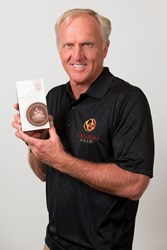
$300 million, has agreed to become a distributor and “global spokesman” for Organo Gold, a five-year-old company that sells herbal-infused coffees and teas through a network of “independent distributors,” like the people who sell Amway products. Is this an offer Norman really needed to accept? Why would one of the biggest people in golf allow himself to look so small?
Mike Keiser may not exactly be singing “On Wisconsin,” but he’s pulling out all the stops to find investors willing to fund the construction of his next development venture. Last week, the majority owner of Bandon Dunes did a song-and-dance at the University Club in Milwaukee, where he told an audience of 40 that he’s settled on the architects for the first two courses at Sand Valley, the 1,500-acre golf complex he aims to build near Wisconsin Rapids. The commissions have been won by Tom Doak and Coore & Crenshaw, although Keiser hasn’t decided whose course will be built first. “They both are, I think, geniuses,” he said in a comment published by the Milwaukee Journal Sentinel. If Keiser can come up the money, he’ll break ground on course number one next spring or summer. David McLay Kidd and Jim Urbina, the other architects who were considered, can keep hope alive by reminding themselves that the property Keiser aims to buy can accommodate five golf courses.
With a $50 million acquisition fund burning a hole in its pocket, Concert Golf Partners has taken possession of its fourth golf property in Florida and its fifth overall. The Newport Beach, California-based company has purchased Legacy Club at Alaqua Lakes, which had been under threat of foreclosure by the bank that controlled its mortgage. The property features a 15-year-old golf course designed by Tom Fazio. It’s in suburban Orlando, Florida, just a short drive from Concert’s Heathrow Country Club, so a dual-access membership plan will be offered. Legacy Club had been owned and operated by Heritage Golf Group. The terms of the transaction haven’t been disclosed, but a press release says that it includes “a novel approach to the club membership refund liability.” The purchase is Concert’s third in less than a year. Elsewhere in Florida, it also owns Carrollwood Country Club in suburban Tampa and Golf Club of Amelia Island in metropolitan Jacksonville.
By this time next week, Billy Casper Golf may have a five-year contract to operate the town of East Hartford, Connecticut’s golf course. East Hartford Golf Club has been losing customers and money for years -- it generated 60,000 rounds a year in the 1970s but reportedly gets only 20,000 today -- and it needs lots of improvements, including a new irrigation system. Worse, the course doesn’t figure to become profitable anytime soon, as its public image has been corroded. That being said, East Hartford officials are wary of the deal BCG has proposed, for it requires a $1 million investment from the town (for new equipment and other expenses) and a promise to cover all future losses at the course. “At the end of the day,” Council Chairman Richard Kehoe told the Hartford Courant, “we’re employing someone that doesn’t have any skin in the game.” The city has been seeking a new operator for months, but it received only two offers, the one from BCG and one from a local group that had no experience in golf management. If an agreement is reached, BCG will take over the course on November 1.
It sounds as if Gary Player’s design group may be having second thoughts about operating out of suburban Greenville, South Carolina. These days, 90 percent of the firm’s work is being done outside the United States, and airline connections would be easier to make if the staff was still in Florida. “I should be moving everyone to Shanghai,” Marc Player told the Greenville News. “But we prefer Greenville to Shanghai.” What’s more, the firm agreed to relocate to the Cliffs at Mountain Park years ago, before the community went bankrupt and was sold. Today, it has no marketing agreements with the Cliffs’ new owners. It’s merely a tenant, not a business partner. The firm uses its recently opened course at Mountain Park as a showcase for its design talents, but if prospective international clients balk at the travel involved in getting there, things may change. “If my clients say, ‘Well, we’re not flying to America to come and look at how you live, work, and play,’” Player said, “then I have to regroup and reconsider.”
After long, drawn-out flirtations with bankruptcy, foreclosure, and a public auction, the deeply troubled Woodlake Golf Club has found a new owner. Anonymous investors operating as Woodlake Acquisition LLC have taken possession of the 186-acre property in San Antonio, Texas, reportedly by agreeing to purchase a lien held by the local water authority. The price: $939,130. The club, once one of the area’s top golf properties, features a Desmond Muirhead-designed course that opened in 1972. A spokesman for the new owners told the San Antonio Express-News that long-overdue course improvements are on the horizon, and perhaps residential development on adjacent property as well.
Gábor Széles, the wealthy industrialist with a bent for “royal indulgence,” wasn’t just blowing smoke when he said he’d build a golf course in Zalacsány, Hungary. Széles has turned the formerly abandoned Batthyány Castle into a hotel, as he promised he would, and the Zalai Hírlap reports that the Robert Trent Jones, Jr.-designed golf course that’s under construction on his 400-acre property is expected to open next year. “If this comes through,” Széles told the newspaper, “Hungary will finally step on a growth path it has not been on for about 500 years!” The course will anchor a community called Zala Springs, which at build-out will also have 400 villas, more hotel rooms, and a spa. Széles thinks he can complete the whole shebang by 2016.
Don Padgett II is hanging up his SoftSpikes. The president of Pinehurst Resort & Country Club will retire next October, after the 2014 men’s and women’s U.S. Open championships are played on Course No. 2 at the famed golf destination in North Carolina. “With the upcoming U.S. Opens and exciting plans for the growth of our membership,” he said in a press release, “I felt this was the right time to begin the transition for the future leadership of Pinehurst.” Padgett worked for ClubCorp for a quarter-century, mostly as the general manager of Firestone Country Club in Akron, Ohio, and he knew Pinehurst well before he arrived in 2004, as his father had worked there as a director of golf. He’ll be succeeded by the resort’s current executive vice president, Tom Pashley.
Greg Norman, a member of the World Golf Hall of Fame, the CEO of a multinational corporation, and a guy who’s said to be worth
$300 million, has agreed to become a distributor and “global spokesman” for Organo Gold, a five-year-old company that sells herbal-infused coffees and teas through a network of “independent distributors,” like the people who sell Amway products. Is this an offer Norman really needed to accept? Why would one of the biggest people in golf allow himself to look so small?
Subscribe to:
Posts (Atom)

 Posts
Posts

